
Learning to bloom without fairytale expectations
A Response to Cinderella and Frankenstein’s Monster Are Dead at the Edinburgh Festival Fringe 2026
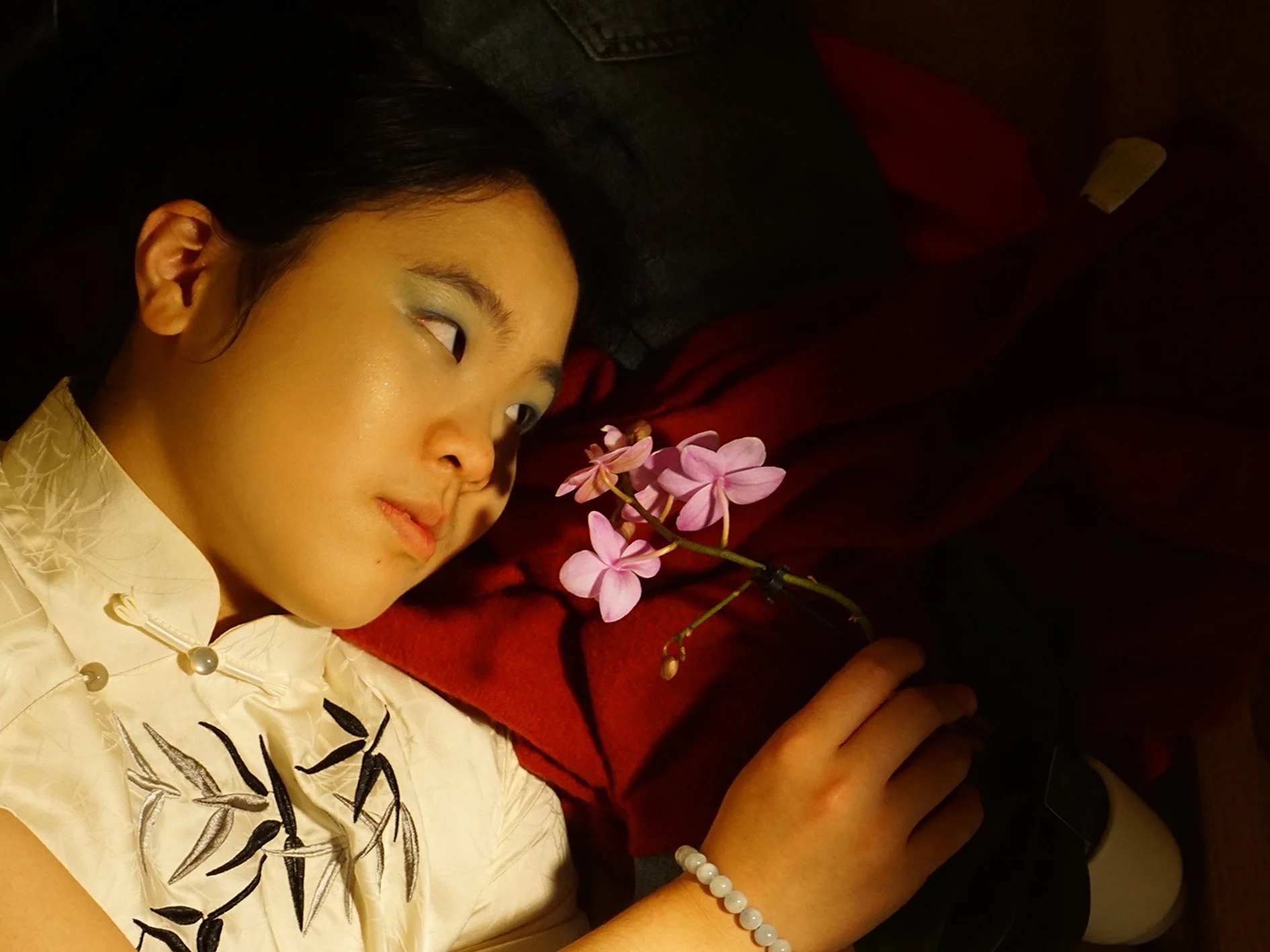
Lan Jiang in Cinderella and Frankenstein’s Monster Are Dead | Photography by Petunia Hu
Heungbu tending to an injured swallow. The youngest pig building his house out of bricks. Fairytales teach children culture and values in ways few other things can. Hard work bears fruit. Bravery brings reward. Kindness begets beauty.
In high school, and this is a memory that still makes me squirm, I had a breakdown over being assigned to the Cinderella group instead of Snow White for the school play. The dwarves felt closer to home; their bodies made Snow White more imaginable to me. Or maybe I missed my friends. What I still can’t quite explain is why any of it mattered enough to leave a teenager sobbing her heart out over fairytales.
Naturally, the Edinburgh Fringe production Cinderella and Frankenstein’s Monster Are Dead caught my attention. The one-woman show, directed by Petunia Hu, follows Zhao Lan, a Chinese exchange student who goes to America to live with a host family. At school in Tampa, Florida, she wins the role of Cinderella while finding herself drawn to Frankenstein’s Monster. As books are stacked and scattered across the stage, solo actor Lan Jiang moves between Zhao Lan and those around her without changing costume or accent, relying instead on subtle shifts in confidence and physicality. Among them is Lilia, the family’s blonde-haired, green-eyed daughter. Despite their connection through Chinese heritage, Zhao Lan reaches for something visibly familiar too, insisting Lilia’s eyes are hazel. If they are, perhaps they are not so different.
That search for recognition extends into the roles around Zhao Lan. At school, her classmates question her accent and intelligence, then whether it is really “fair” for her to play Cinderella, as though the role belongs more naturally to somebody else. One of the quieter things fairytales teach us is how to cast ourselves. They give us values, but also bounds: who stays home while another goes to the ball, who marries the prince, who can cross from one world into another without being questioned. Which parts feel available to us, and which we leave for somebody else.
I have never related to Cinderella. Her story depends on a seamless transformation I had already learned, as a disabled child, not to expect: put on the right dress, step into the right room, dance with the right prince, and suddenly, you belong. Cinderella enters the prince’s world and immediately looks as though she belongs there. I knew my body moved through the world differently; that promise felt as fantastical as growing wings.
Zhao Lan finds something compelling in Frankenstein’s Monster, introduced through Lilia’s grandmother Gina, who remembers Mary Shelley’s Frankenstein as the first Western novel she ever read. The Monster observes people, learning language as a route towards them, but remains outside. Cinderella transforms and enters another world. The Monster learns its rules and is still left looking in. Neither quite gives Zhao Lan a place to put herself.
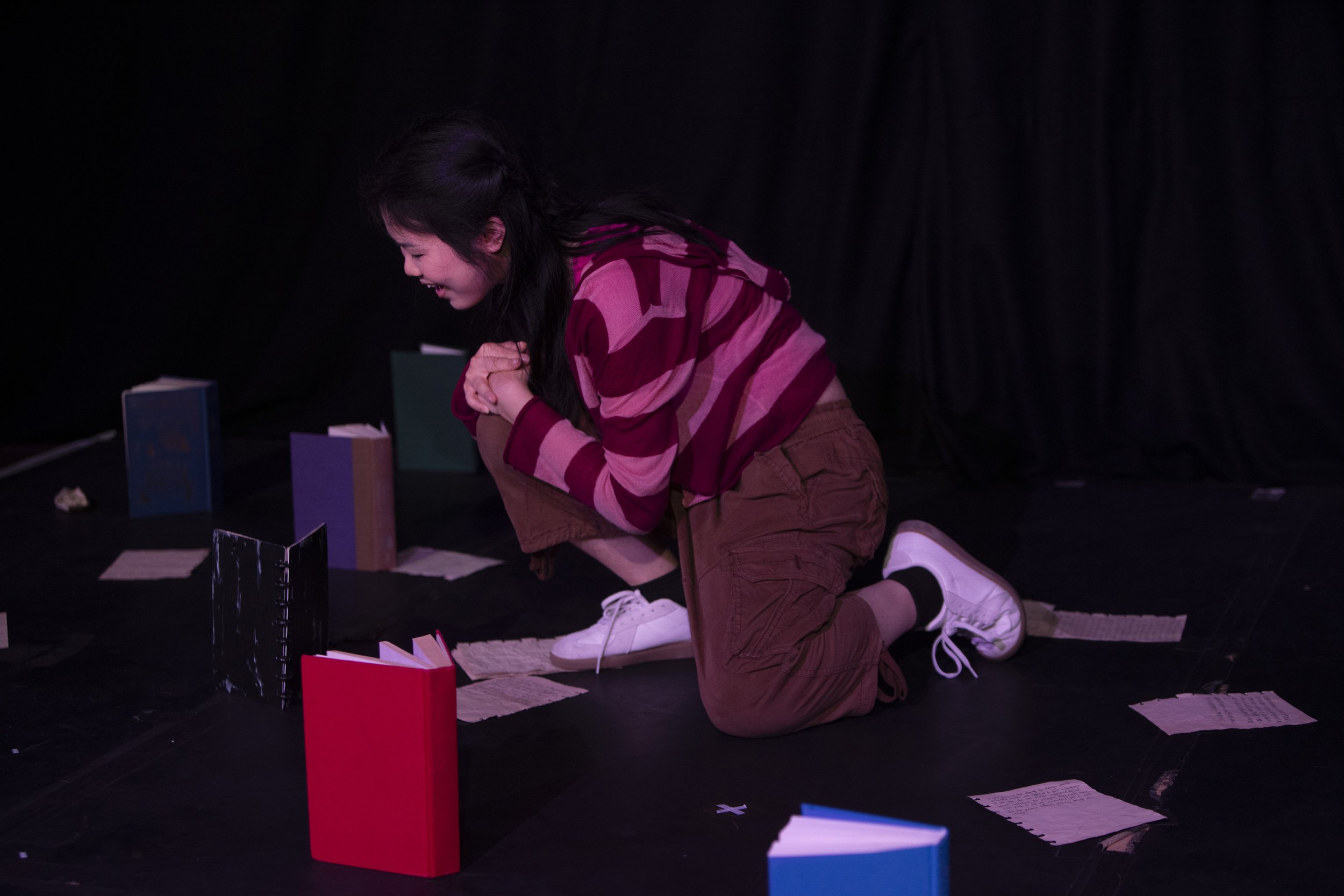
Cinderella and Frankenstein’s Monster Are Dead at the Edinburgh Fringe 2026 | Photography by Graham D Clark
The question of belonging takes another form in Orchid Grass, a Chinese folk song in which a gardener carries an orchid down from the mountains and plants it in their garden. Zhao Lan only knows the first verse. When Lilia asks whether the orchid blooms, she answers, “No. How does a flower bloom when it’s moved from one place to another?” It hit me like a brick. “Blooming” is such a beautiful word for something that costs so much. Moving carries so much optimism: new beginnings, a chance to flourish. Children are expected to transplant beautifully. To be adaptable. Now I wonder if what that really means is that we learned quickly not to show the strain. The closer Zhao Lan gets to feeling at home in Tampa, the more conscious she seems of what cannot simply be carried across unchanged. There is friction in wanting to fit into one place without sanding away another part of yourself.
After Zhao Lan’s opening night, Jiang slips into playing Lilia and sings Orchid Grass all the way through. Earlier, Zhao Lan cannot imagine the orchid blooming. By the end, Lilia’s song gives another answer. The strain of being moved has not disappeared; blooming was never proof that being moved had been painless. Zhao Lan offers Lilia an incomplete piece of home and has it returned whole. It feels fitting that Jiang has embodied both women all along without making them the same. When Zhao Lan reflects that she no longer sees the hazel in Lilia’s green eyes, the two ideas finally meet: the orchid can bloom as itself; Zhao Lan no longer needs to find herself in Lilia’s reflection.
Maybe that is why I cried over Snow White. I understand the impulse better now. Zhao Lan reaches for Cinderella, Frankenstein’s Monster, someone else’s eyes. But Cinderella and Frankenstein’s Monster are dead. By the end, she is given not a pair of glass slippers, but the rest of the song. Fairytales teach us plenty of easy lessons. The harder one is unlearning the roles we cast ourselves, and others, into.
Cinderella and Frankenstein’s Monster Are Dead was performed at the Edinburgh Festival Fringe from the 7 — 29 August 2026.
This Response was narrated by Jess Brough, with sound editing by Sarya Wu.