
Responding to Hater at the Edinburgh Festival Fringe 2026
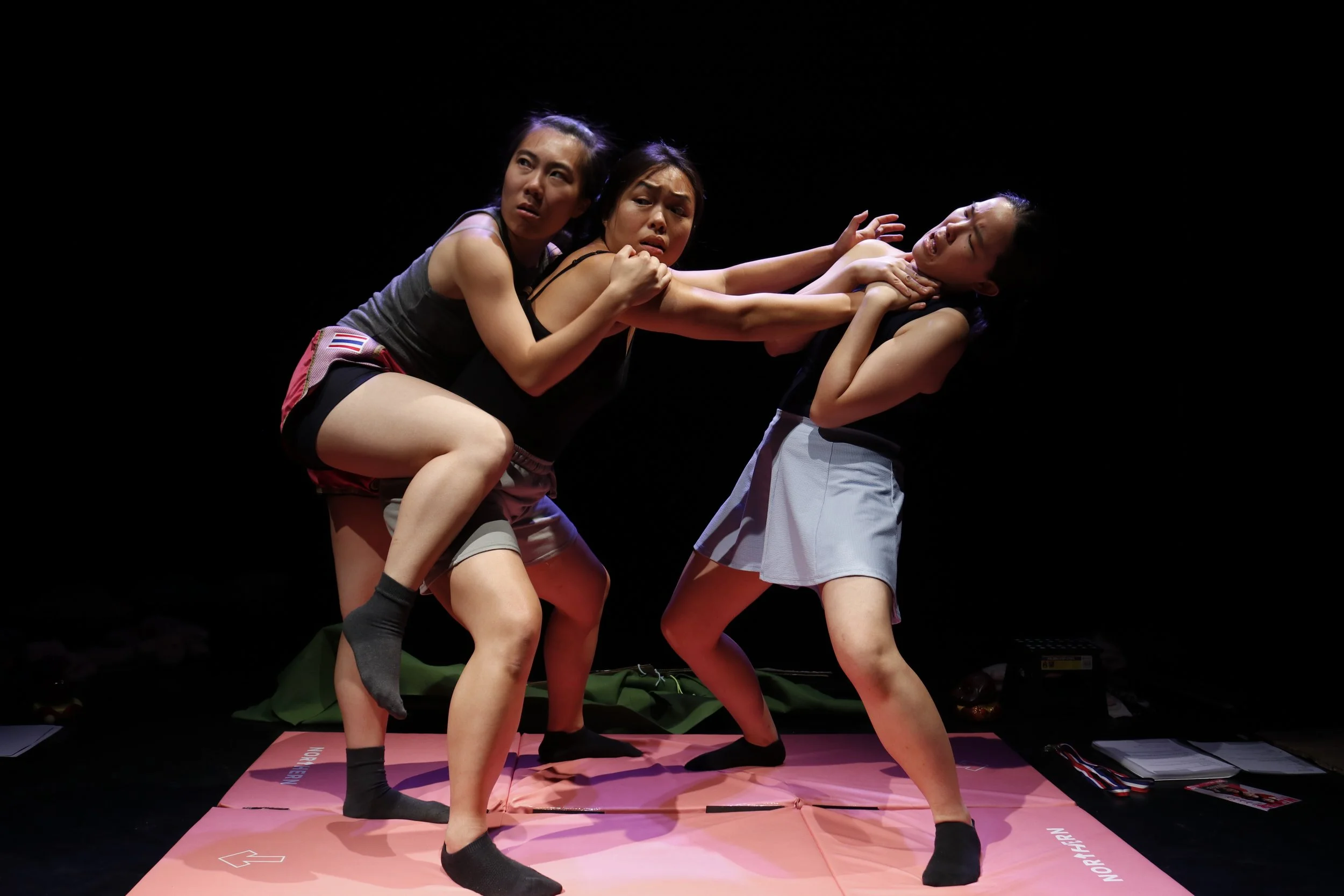
Hater at the Edinburgh Fringe, at Gilded Balloon Patter House | Brava Guava
I cannot pinpoint when I started oscillating between anger and despair. Another racist attack in Scotland, another empty statement. Another precarious creative opportunity, another exhausting conversation with an institution. A cycle of feeling unsafe or unheard. As far-right violence became more normalised and the arts remained indifferent, I felt fewer pulses of hope. In the month preceding the Edinburgh Fringe, I flatlined into rage.
Gawa Leung’s three-person play Hater centres the infuriated. Before it begins, the audience must decide on its casting. Each performer auditions for the play’s characters, and we vote with enthusiastic praise. In the first performance of their Fringe run, JJ Lam is chosen as the “hatee”, and Lorraine Yu and Leung will embody the two “haters”.
Early on in the play, we come to understand how an industry pigeonholes East and Southeast Asian women. An actor mistakenly receives an acceptance email confusing her for another candidate; the only similarity between them is their heritage. I laugh at the sarcasm and observational jokes a little too hard, the stereotypes echoing. After losing this opportunity, the first hater starts her obsession with the “hatee”. She convinces the audience why we should also despise them. I, too, can see their pretentiousness and virtue signalling. I, too, have tasted an industry’s racist crumbs.
Insecurity is amplified by social media. When the hatee reads out her own Instagram posts using fun cardboard props, the tone is hilarious because it conjures the familiar image of the self-righteous influencer. But these cutaways are still through the lens of the hater. She has built this personality of her rival, creating a one-way relationship because of the false intimacy of online platforms. It can be easier to believe that an individual, or community, is responsible for our circumstances: to hyper-focus on personal ‘failure’, without recognising the real villains.
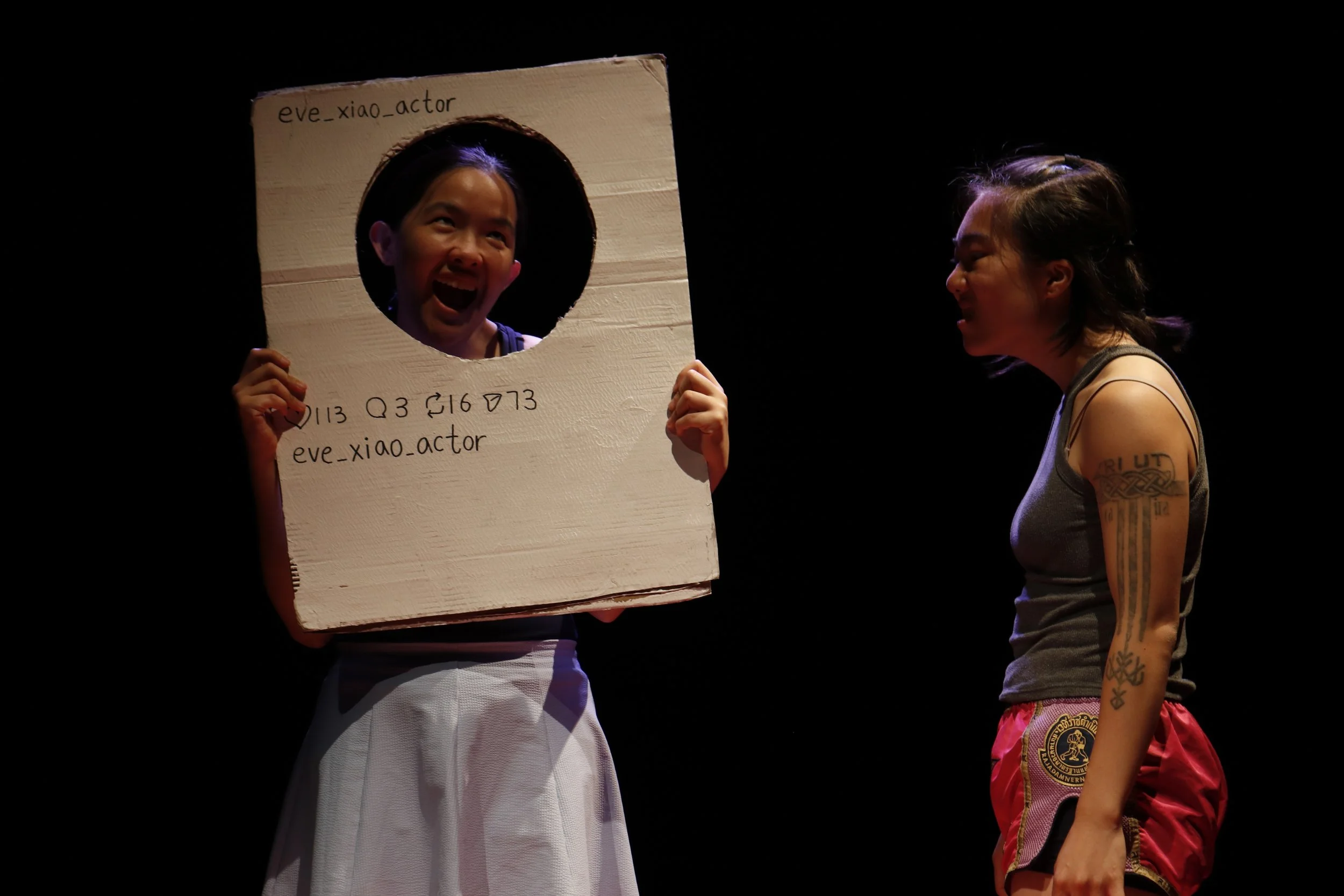
JJ Lam and Gawa Leung in Hater at the Edinburgh Fringe | Brava Guava
The hater plays out different scenarios, describing the ways in which she could orchestrate her enemy’s downfall. The lighting abruptly cuts out. I am confronted with the reality of her mental state. In this vignette, the hater is unaware of the audience. She is no longer confiding in us. Instead, I feel like an observer. She is sitting on the floor, muttering fantasies to herself in front of a laptop. She is crying. There is no stage, so the hater is barely visible. All I can see is the piercing white glow of her computer screen. I look around the room and at the audience. It is compact, filled and intimate, yet there is a gulf between us. In it, I see the hater’s rawness, the basic needs fuelling her anger. Her hypervigilance, her desire for acceptance: the cycle of feeling unsafe or unheard.
The haters’ obsessions with revenge lead to their romantic and familial relationships breaking down, including with each other. We learn that they are sisters who have been traumatised by their father’s anger and have internalised shame and self-hatred. We see how rage can distract from pain rather than alleviating it: how we can displace our insecurities and fears onto an external source. Hater doesn’t just centre the infuriated — it shows us the complexities of intergenerational trauma. It also holds multiple truths. The characters are in need of support and healing. They also exhibit rage without being diminished or policed. When they seek help for their anger issues, they are offered tiger balm. We can find laughter in the pain.
Hater shows us the realities of the human experience, navigating the overlaps of idolisation and envy, admiration and rivalry, connection and loneliness. Amid their elaborate revenge plans, there are glimpses that the haters had just wanted to be seen. Their rage seeds from feeling erased by the hatee, who lamented about how lonely she felt being the “only Chinese woman” in the room, despite the haters’ presence. While we shouldn’t always expect to find kinship, the special flavour of rejection coming from the only other marginalised person in a space resonates with me: the realisation of their desire for self-preservation over solidarity, their striving to be accepted by capitalism and white supremacy.
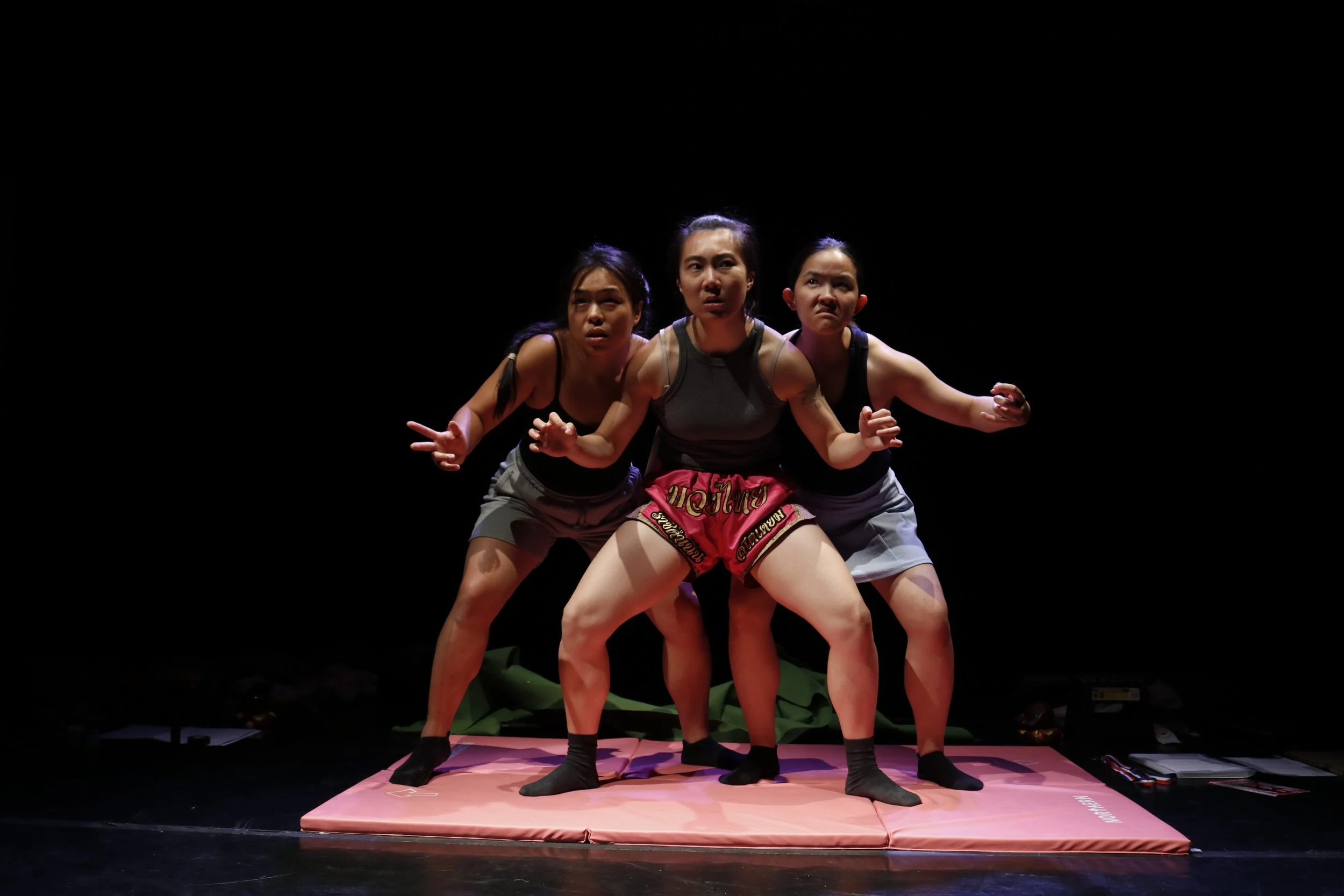
The cast of Hater at the Edinburgh Fringe | Brava Guava
Hater reflects a sector that thrives on pitting marginalised communities against each other, and a society that takes pride in competition. It explores the limits we will go to in order to succeed and the toxicity of individualism. At the end of the performance, the director addresses the audience, reminding us that the three actors know each character, so there are six ways to experience this production. I wonder how they interpret each part, how each actor brings their own flair to fully formed characters. What does it look like when the hatee becomes the hater?
To me, Hater is an antidote to the spaces claiming there is only room for ‘one of us’. The fluidity in casting demonstrates that there are truly no limitations in the roles that we can play. We don’t have to comply or assimilate. We can break free from existing structures and fill the space with collaboration, nuance and care, to celebrate each other’s successes.
Hater was performed at the Edinburgh Festival Fringe from the 5 — 31 August 2026.
This Response was narrated by Jess Brough, with sound editing by Sarya Wu.
