I name myself becoming
Responding to The Masquerade by Jj Fadaka
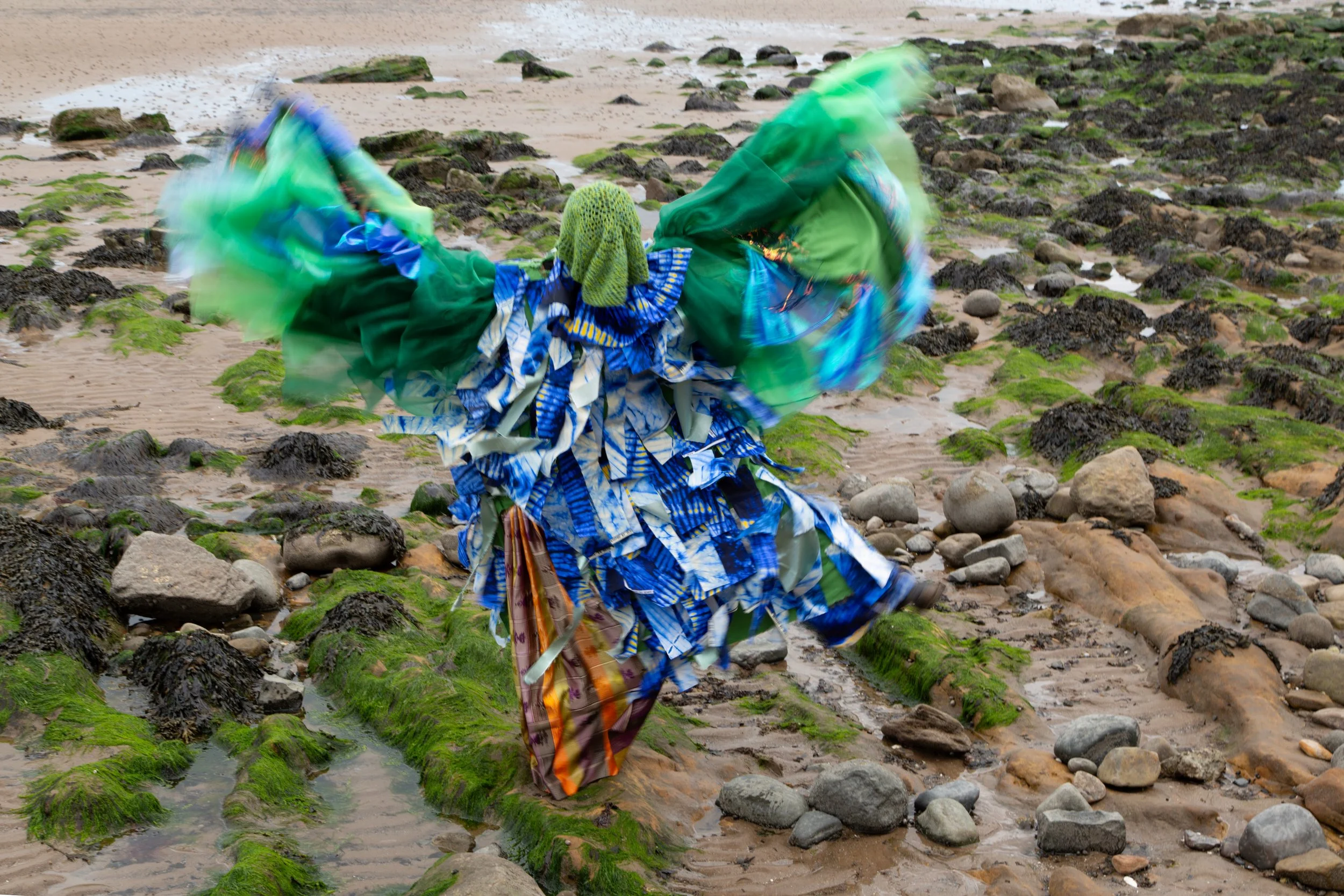
Jj Fadaka in The Masquerade | Photography by Chantelle Gomez
In the beginning there is the masquerade
the beat of the drum
swirled up dust rising from bare feet
dancing and other offerings
there are the people who gather to worship
to be corrected
to pay respects
to be chased and if lucky
to experience mercy.
*
At Fruitmarket Café
a dancer enters in blue
through a curtain of red beads
a
tactile
garment
àdìrẹ
majestic
moving
authoritative and free
They are of the Niger Delta, of water, bog and green
born of swamp and memory
They are of the club, of self-acceptance;
in the music ballroom culture settles in comfy, familiar.
The dance is pleasure and eclectic
The energy moving
It holds what is sombre , sorrow
flooding in via a screen
The beat, in contrast: the body
deviant relief;
We, the audience, receive it in earnest and recognition
We soon dance too.
*
It has begun long before this beginning
says producer Khadea Santi announcing the show’s entrée
this is an offering for the diaspora predominantly
(I lean in and register a few white people simultaneously lean out)
This is after tragedy, Santi says (now my eyes are wide and my posture is tense in anticipation); this is a story of becoming...
Hearing that
my belly fills with warmth
there is excitement in my feet
there is this puffy-fluffy-soft feeling in my chest
there is also soft in the corners of my eyes
This is an offering for us
The diaspora.
*
A masquerade is a force from beyond this realm
is
ancestor
deity
maybe even god themself.
There are those who have trained their whole lifetimes (or more) to be embodied; to become vessel; to let spirit enter them
it’s a becoming
an emergence as messenger
of higher meaning
of warning
of correction
to carry ancestral and spiritual knowledge and tradition
to bare a peoples’ truth
to bear purpose.
Who are we as a people without the masquerade reminding us of the essential virtues of our collective selves? Who would we become without a higher name holding us to account, impersonating our promises to ourselves, our ancestors, forbearers and futures alike?
To witness a masquerade is to feel fear, reverence
is to experience veneration
is to behold centuries of cultural, ancestral tradition
is to have your culture unfold right there in front of you – in fact you will be running from it, barely escaping it.
Clutching your chest, you’ll feel frazzled, loudly panting, the clothes on your back torn, the sweat on your palms and neck icy; your eyes bloodshot
all trophies of your meagre survival.
*
When the dancer speaks they break the pattern of the masquerade tradition as well as colonially imposed silences
I am not translatable
You forced the Queen’s English on me
My gold belongs at my home in Benin
This body’s still got some soul in it
How many more moons until I get my madness
until I can access my ancestral erotic?
*
Fàdákà speaks about violence
and we know it well
(in fact I am no longer tensely leaning in, it’s so familiar, I let the poetry wash over me, careful not to let it seep too deeply into my body)
We know the trauma
And so I am in awe with where Fàdákà has started this story
At the way through, at the new beginning of the end, at the journey of becoming
at the graduation
with the acceptance letter
scars
opportunities
and all
…their moving body//movement of fabric and pattern ...a filmscreen into a life blending with //handmoulded gifts of dark clay//their voice//the fertile brown earth of the Delta…
*
What does it mean to embody masquerade in the diaspora?
How can we access this knowledge?
Where does it sit in our bodies and who will translate it for us?
*
Dark brown scars beautifully adorn Fàdákà's belly
We see them drag themselves out from under the duvet
We see them mellow
We see them crawl back into bed
We see them in front of the mirror
We see them adorning themselves with jewellery
We see them testing their fit
We see them give up
And we see them smile at themselves encouragingly
We see them pick themselves up again
The tragedy, unnamed, is recognisable to the audience, we hold its grief and nausea like our own.
What is striking is not its physical and mental aftermath, nor witnessing it or even that every act that follows is resistance! – but that by seeing it on screen, performed, amongst an audience of friends and strangers alike, bit by bit, we are invited to extend this very humanity Fàdákà offers themselves, also to our own bodies, in our own lives.
and so it becomes a question of humanity
When we see ourselves in Fàdákà’s representation, in their offering to us
can we extend permission to ourselves?
Can we, byway of witnessing Fàdákà, accept our very own humanity?
Go on:
Put the duvet back over your head
Cry ugly tears
Eat plain rice
Or accumulate credit card debt ordering takeout
And then dance
Dance all the dances
Knowing we will be here again
sanity, survival, healing, ripples in waves; only resistance is constant.
*
In the end it’s the gifts, and the trees and the dancing, and the face in the wind and the water and the yarrow tucked between locks that provide the healing; it’s the bright smiles in the audience and the encouraging words extended to a bunch of young Black queer artists who have had the resources and freedom to create and be seen.
In a time of constant moaning, endless genocide, climate catastrophe, corporal violence and systemic injustice Fàdákà's The Masquerade is hopeful. A signal that there is space for us, not because we are allowed to exist but because there is a powerful young generation of Black queer artists and thinkers who are relentless in unapologetically exploring their becoming.
This is only a beginning.
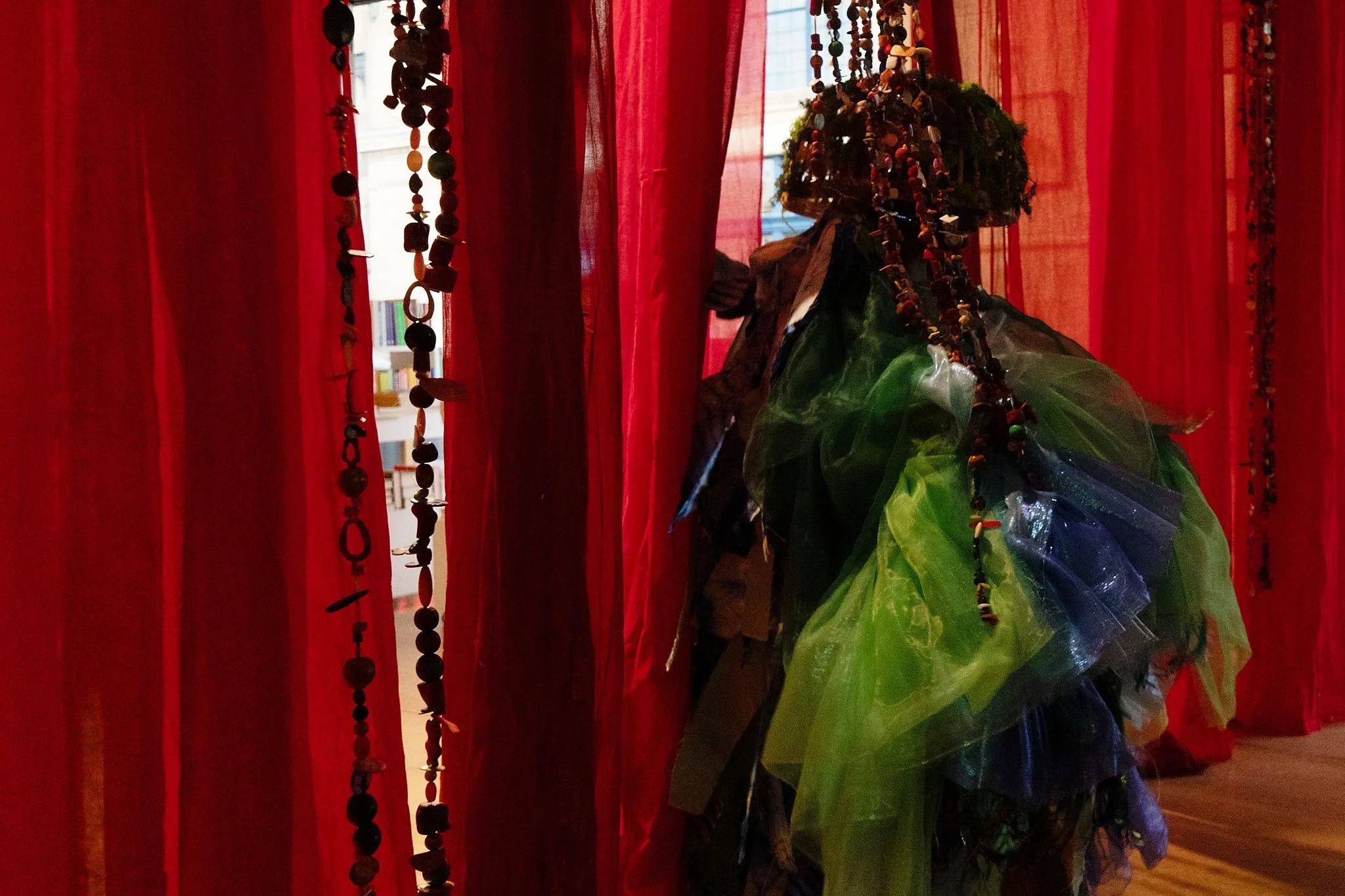
Jj Fadaka in The Masquerade at The Fruitmarker Gallery café, 2026
The Masquerade was performed at the Edinburgh Festival Fringe on the 18th, 20th, and 21st August 2026.
This Response will be recited by Titilayo Farukuoye, with sound editing by Sarya Wu. Re-visit the poem soon to listen.