
Korean Season at the Fringe, where ceilidhs and hanbok collide
Responding to Tether인연 at the Edinburgh Festival Fringe 2026
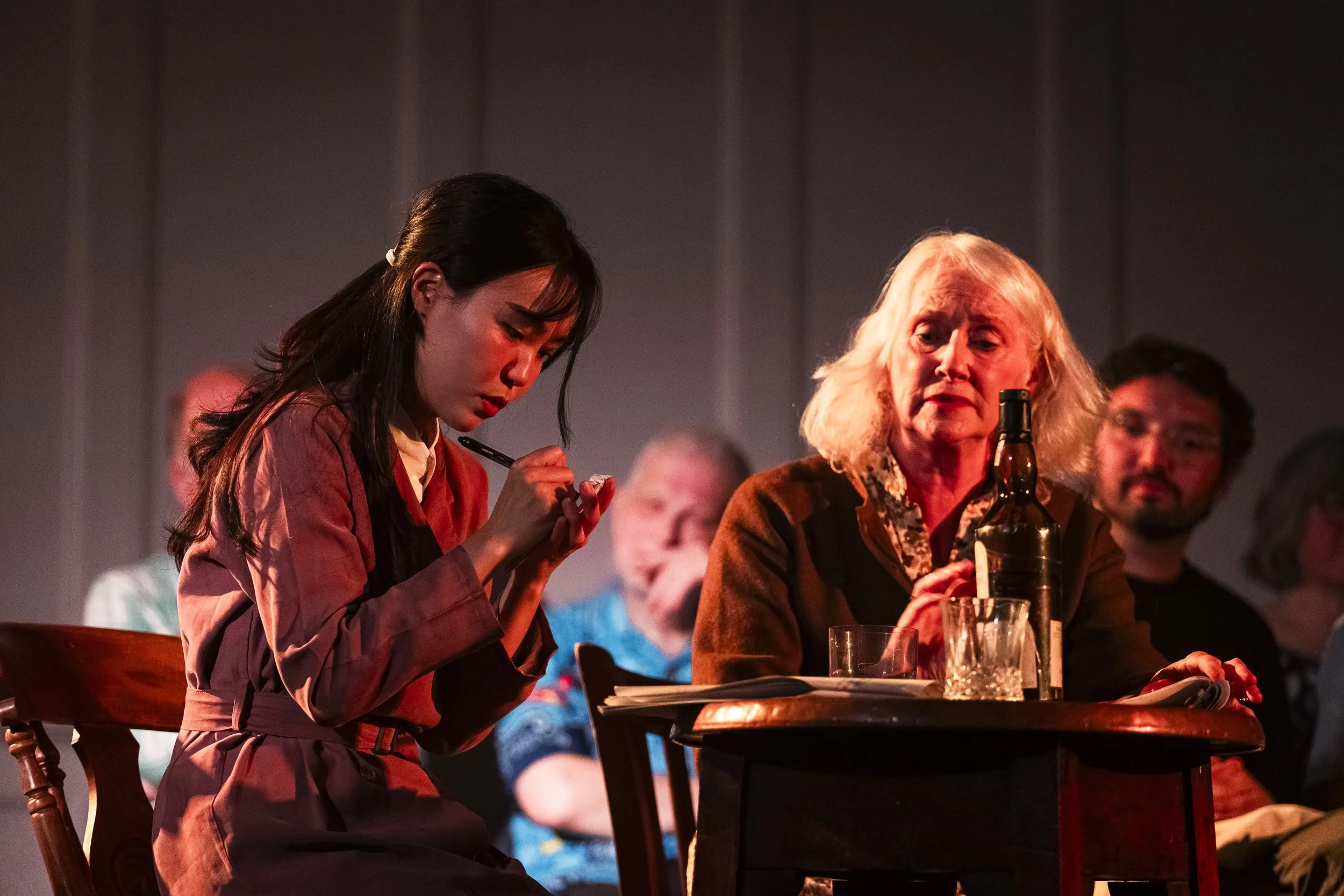
Tether 인연 at the Edinburgh Fringe | Photography by Eoin Carey
Early morning, early August 2015: my first full Fringe as an Edinburgh resident. I arrived on the Royal Mile before the box office opened so I could beat the queues. I may have been the only Fringe-goer at this hour, but I was not alone. A full cast of street performers greeted me in traditional Korean hanbok, chanting merrily, playing drums, smiling and flyering for ‘Korean Season’, an annual showcase from South Korea. The main objective of its programme might be to introduce Korean culture to Western audiences, but for me it serves as a cultural re-introduction to my own heritage.
Year after year, different acts have circulated through Korean Season’s offerings, but the exuberance stayed constant. During the festival I would see as many of these shows as I could: Korean drums (Tago Korean Drum II, 2017); Korean folk musicals (1457: The Boy at Rest, 2025); Korean puppet shows (Dream Space, 2025). 2026 is the first year since Korean Season’s founding that they are taking a break. Only in its absence did I realise how much these shows meant to me. I also realised that Korean Season and I arrived at the Fringe in the same year.
This summer, the closest comparison to Korean Season’s offerings of traditional theatre at the Fringe was the Scottish-Korean play Tether 인연. This interactive performance is a collaboration between Scottish company Wonder Fools and South Korea’s Theatre San. Tether 인연 tells a love story across three decades, two countries, the Korean War, and Japanese occupation, all the while mixing in folk songs from Scotland and Korea.
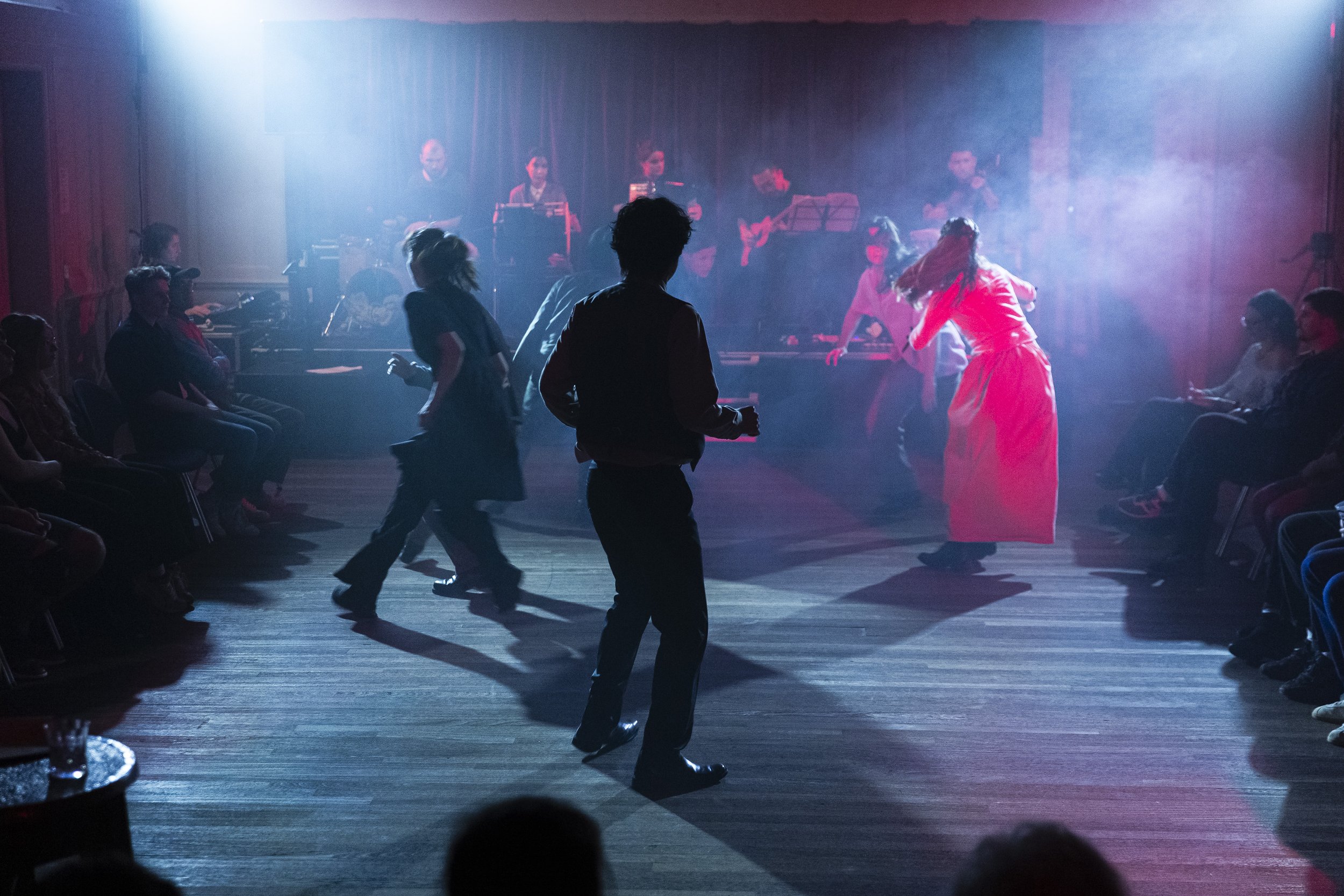
Tether 인연 at the Edinburgh Fringe | Photography by Eoin Carey
Anyone in the vicinity of Summerhall’s building will know when a performance of Tether 인연 is about to begin. The spirited ceilidh band and whoops of the dancers are as vibrant as Korean Season on the Royal Mile at 8 AM. The story follows a Korean missionary (Hyeon-kyu Choi) arriving in Glasgow where he falls for the landlady’s daughter (Molly Bryson), despite her persistent rudeness. She warms to him upon realising that they have both suffered political unrest. It’s a strange racism-to-lovers premise, but perhaps there is historic truth to his othering; in 1970s America, my mother’s family had to hide the kimchi in the back of the fridge. These days, we live in the era of ‘Korean Cool’ wherein Korean pop culture charms the west. At the comedy showcase Kimchi Comedy: K-Comedy Racist Hunters, nearly every audience member raised their hand as a kimchi fan.
Fringe audiences are not just into K-Pop, but more traditional Korean art as well. Just down the hall from Tether 인연, Minyoung Kim’s geomungo concert PLASTIC enchants audiences with Korean music and no subtitles. An intimate odyssey of sound, Kim performs a blend of traditional and contemporary music on the Korean harp to mesmeric visualisations projected behind her. Breaking the trancelike flow with a breath of human-to-human connection, she marvelled: “You probably don’t even know what I’m saying. But you can feel.” It was a statement, not a question. Her music enchanted us all. As we filed out of the Victorian lecture hall, the mostly non-Korean audience approached her harp with respectful curiosity.
Tether 인연 itself was inspired by last year’s Korean Season folk performance, Ari: The Spirit of Korea, when Wonder Fools artists realised how traditional music is sonically and thematically similar across both Korean and Scottish cultures. Tether 인연 draws comparisons between The Bonnie Banks o’ Loch Lomond and Arirang. While both are about loss and hope for unity across landscapes, the significance of Arirang to Korea feels different. My mom, born in Seoul, described it as “more than a song. It is Korea.” Arirang is also a centuries-old premonition of the country’s division into North and South. The song is claimed by both nations in UNESCO’s Intangible Cultural Heritage list, in a rare instance of agreement.
2026 is a big year for Arirang, as the title of Korean band BTS’s much-anticipated comeback album. Returning from a four-year hiatus for mandatory South Korean military service, BTS takes a stand for their Korean heritage in this album like no K-Pop release has before. Now on their world tour, BTS inspires stadiums of thousands to sing the song Arirang, a deliberate “iconic moment” envisioned by their chief producer Si-Hyuk Bang as detailed in Netflix’s BTS: The Return.
If Korean culture has proven to resonate with westerners on its own, I wonder what Korea has to gain from collaborating with Scotland? Whenever Koreans speak about sharing Arirang with the world, it is with a tone of honour. While I wish Tether 인연 were more balanced in its appreciation for both cultures, as a child of the diaspora I am comforted by the presence of Korean art at the Fringe. For one month, Edinburgh becomes my personal heritage portal, where ceilidhs and hanbok collide. Next year, I look forward to Korean Season’s return.
Tether 인연 was performed at the Edinburgh Festival Fringe from the 6 — 31 August 2026.
This Response was narrated by Xandra Sunglim Burns and sound edited by Sarya Wu.