

May death lead us home
Memuna Konteh
Michael Jenkins’s short film, Pickney, is a haunting yet uplifting story about the unifying power of grief and the complexities of mixed-race identity. It follows teenager Leon, a mixed-race Bristolian with few ties to his Caribbean heritage outside of a close relationship with his nan, Pam, the mother of his estranged father, David.
Hiding in Plain Sight
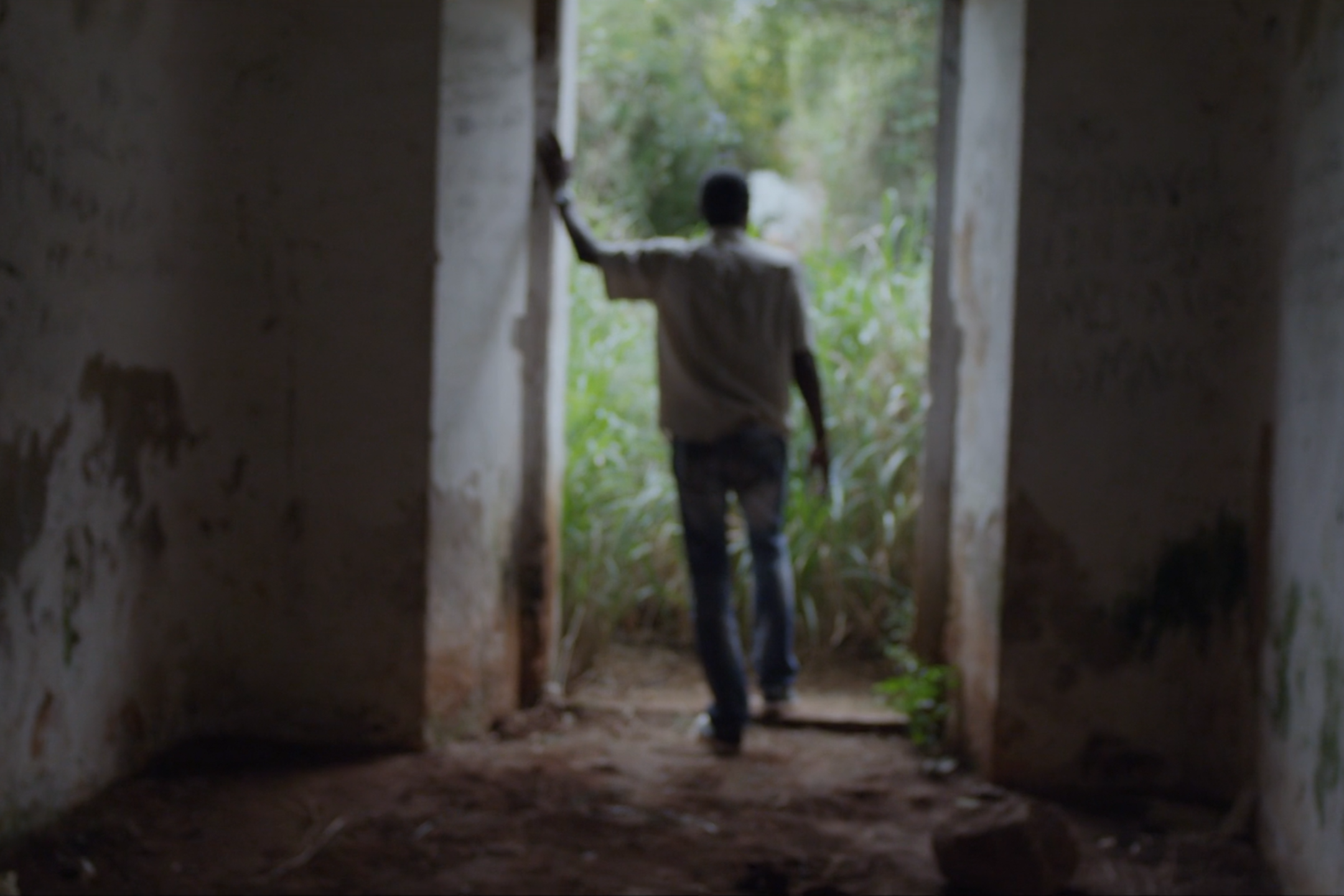
Andrés N. Ordorica responds to Batería, a film by Damián Sainz Edwards that captures the raw beauty of a disused military base just outside of Havana, a refuge for gay men for cruising, connection, and imagining better futures.

On oil, Drexciya and building pressure
Eilidh Akilade
It is left unsaid: Drexciya. I clasp it in my hands and it is as if I have held it before.
Drexciya rests on the seabed, beneath the ripples and the tides. From ships, the pregnant Africans were thrown overboard, their children then birthed into the sea. The water babies swam down and made their world at the very bottom. Drexciya.

The power of orating our histories
Georgina Quach
Still We Thrive, written and directed by Campbell X, ensures we never look away from the past. It brings together contemporary Black actors speaking to camera with archive footage of Black history from the Caribbean, United Kingdom, United States and the African continent. As poet Elizabeth Alexander said, for so long, communities of colour have had to “carry around knowledge and stories in our bodies,” because resources were not devoted to preserving the spaces that held those stories and culture.

Embracing stillness to conceive the Soft Bwoi
Arusa Qureshi
Beyond the constructs and confines of gender, the divine feminine exists deep within us all. It’s the energy that allows for compassion, nurturing and devotion; an embracing of softness and stillness in all its varying guises. In Danny Bailey’s short film Soft Bwoi, the notion of the divine feminine is beautifully encapsulated through the use of folklore and imagery from Caribbean carnival culture and queerness.

Burning flags and banishing colonial dust
Georgina Quach
In Suffocation, sunlight feels harsh. Harsh in the sense that we have been kept in the dark for too long. We, scarred by racism and empire, welcome the sun: it exposes “colonial dust” – what is left in the wake of the bombs, deforestation and destruction used to maintain the mythscape of colonialism.

Beneath the Convulsing Skyline
Theophina Gabriel responds to GRIN by Mele Broomes, a digital fruition of performance, sound, visuals and choreography, subverting hyper-sexualised notions of African and Caribbean dance.
Editorial: We are not alone in this
Fringe of Colour Founder and Director Jess Brough tentatively asks “What do you make, when the world is ending?” and lays out plans for the 2021 festival.

Finding comfort and kinship in our ancestors
Hayley Wu (胡禧怡) responds to Thulani Rachia’s ixwa blue, a film that traces several colonial architectural sites in Cachoeira Brazil, investigating Rachia’s paternal line of ancestry. A Fringe of Colour 2021 commission.

A quiet, queer reclamation of nature
Theophina Gabriel responds to black queer nature poem for khadijah (and all of us), a gentle performance film by Mae Diansangu and one of Fringe of Colour’s 2021 commissions.

The fight for justice requires raising your voice above denial
Kieren-Paul Brown responds to The Elephant in the Room, a powerful mediation on colonialism and racism, written by Alix Harris and produced by Helen Bovey for Beyond Face CIC.

Interrogating the usefulness of labels
Xandra Robinson-Burns responds to Concept-tions, a film by Nicole Cyrus who explores connections to objects and to what makes them who they are, from both an outsider’s view and from within.

Unpacking cross-national discussions of Black identity
Memuna Konteh responds to schwarz (Black), a documentary by Amuna Wagner that intertwines poetry, photography and film to present a series of intimate and stimulating conversations between 17 young, Black Germans.

From Nigeria to Brazil: Unravelling violent diasporic legacies
Nathaniel Brimmer-Beller responds to Agudas, a film by Amber Akaunu that tries to make sense of a painful family history linking Afro-Brazilians to Nigeria, mixing poetry, animation and the archive.

Depicting Black girlhood and hair politics through classroom friendships
Memuna Konteh responds to Blue Corridor 15 – Dubheasa Lanipekun’s candid short film about three Black girls navigating the complex and hostile environment that is secondary school.

Unravelling gender through nature and mysticism
Rho Chung responds to Selkie, a visually sumptuous short film exploring issues of identity and belonging through visual and oral storytelling, by collaborative siblings Niall and India Moorjani.

A beginner’s guide to Bristol’s gentrification problem
Elete N-F responds to Clifford, a comedy short by Corinne Walker with a 70-year old Jamaican protagonist navigating life in a house-share in Bristol.

What does it mean to be free in a policed body?
Asyia Iftikhar responds to Space 2: We’ve Come A Long Way, a music and visual experience by Paix and a Fringe of Colour 2021 Commission.

Building intergenerational bridges with our hands
Anahit Behrooz responds to Mahenderpal Sorya’s experimental film Saeculum, which beautifully explores his father’s life’s work in the construction industry, migration and parenthood.

To be rooted in nature and held by the sea
Xandra Robinson-Burns responds to On The Surface, an animated film by Fan Sissoko that follows a young Black woman swimming in the Icelandic sea and reflecting on her experience of having a baby in a country that feels nothing like home.